.png)
AI Video Production Trends That Matter in 2026
- Desert Lens Studios
- Aug 24
- 6 min read

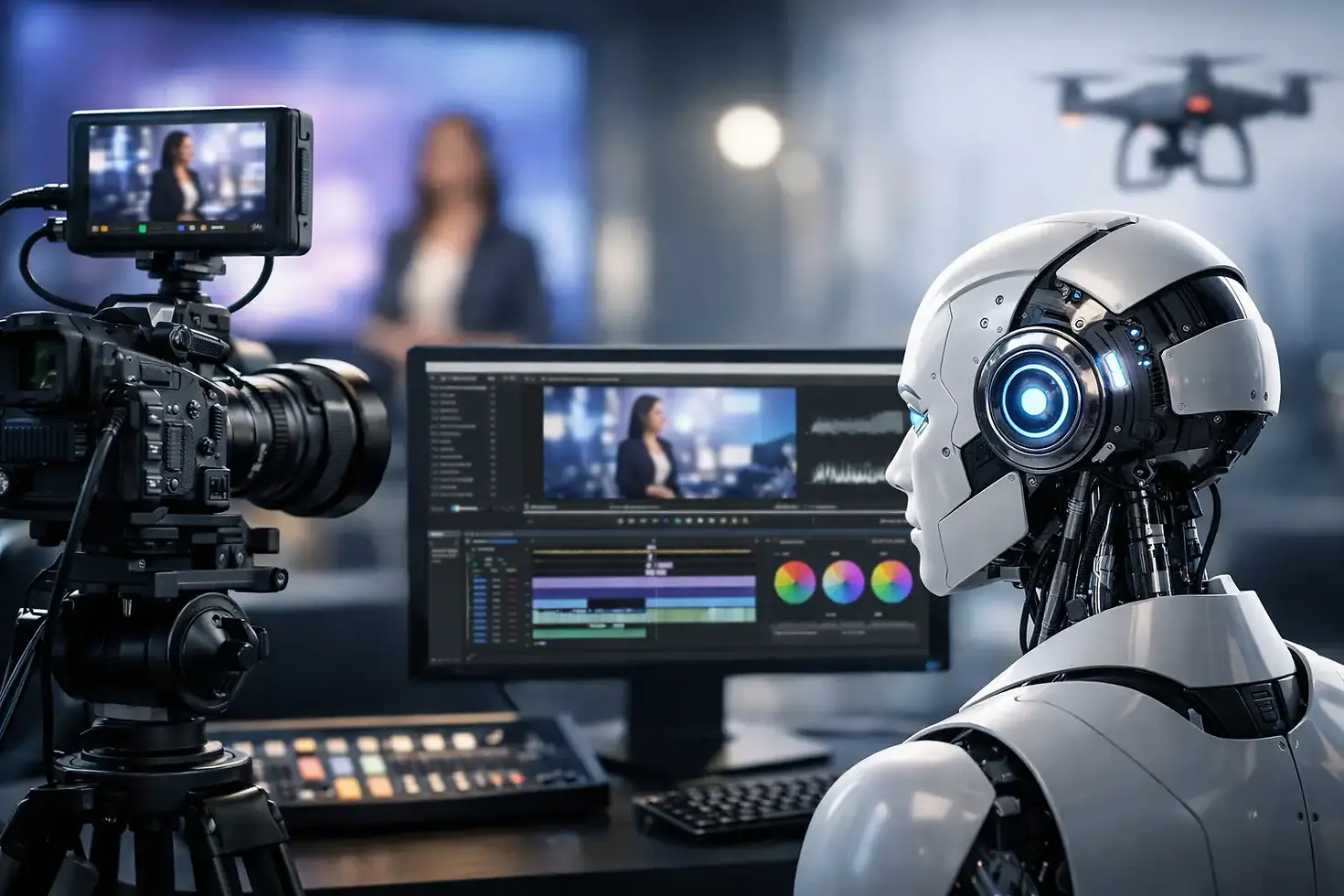
A polished video can now be outlined, translated, resized, voiced, and versioned in a fraction of the time it once took. That shift is real, and it is changing client expectations across every category of visual media. But the AI video production trends gaining momentum in 2026 are not replacing the need for creative judgment. They are raising the value of the people who can turn a fast-moving idea into a visual story with purpose.
For El Paso businesses, organizations, and families planning meaningful celebrations, the question is not whether AI belongs in the production process. The better question is where it supports the vision and where human direction remains nonnegotiable. A commercial has to feel true to the brand. A wedding film has to preserve a moment that will never happen twice. The tools may move faster, but the stakes are still deeply human.
AI Video Production Trends: Faster Does Not Mean Generic
The most visible change is speed. AI can help shape early concepts, organize interview transcripts, create rough shot lists, remove repetitive editing tasks, and generate multiple social cutdowns from a longer production. For a marketing team managing a campaign across Instagram, TikTok, YouTube, digital ads, and internal communications, that added efficiency can make a meaningful difference.
The opportunity is not simply to create more videos. It is to spend more of the budget and production time on what audiences actually notice: a stronger concept, better casting, intentional locations, cinematic lighting, authentic interviews, and a clear call to action. When automation handles routine work, the creative team has more room to refine the message.
There is a trade-off. Fast content can quickly become familiar content. If every brand relies on the same generated visuals, stock-style voiceover, and predictable prompts, the finished work may look polished but leave no lasting impression. Quality still comes from choices: what to show, what to leave out, when to hold on a real expression, and how each frame supports the story.
Short-Form Content Is Becoming a Full Campaign System
Vertical video is no longer a side deliverable added after the main commercial is complete. It has become central to how brands earn attention. The current shift is toward building a single production around a system of deliverables: a hero brand film, short social edits, paid-ad variations, testimonial clips, behind-the-scenes moments, and versions tailored to specific audiences.
AI makes that system easier to manage. It can identify strong sound bites from an interview, suggest first-pass captions, create transcript-based edits, and help teams test different opening hooks. A restaurant may need a quick version that leads with a signature dish, while a service business may need one that begins with a customer challenge and a clear solution.
Still, a strong short-form video is not just a long video cut down to 30 seconds. It needs its own rhythm. The first few seconds need a purposeful visual or statement. The edit needs to move with confidence, and the brand should be recognizable without forcing a logo into every frame. Production planning matters because the best vertical footage is often captured intentionally, not rescued later from a horizontal master.
The First Frame Carries More Weight
Audiences decide quickly whether a video deserves their attention. That does not mean every piece needs exaggerated reactions or trendy effects. For premium brands, an arresting first frame may be the morning light across a finished project, a client stepping into a beautifully designed space, or a detail that signals craftsmanship before a word is spoken.
AI can help teams test copy and edit variations, but it cannot fully understand the emotional value of a moment without thoughtful direction. The opening has to fit the audience, the platform, and the brand promise.
Generative Visuals Are Best Used With Intention
Generative AI can create concept frames, graphic elements, atmospheric backgrounds, and scenes that would be expensive or impossible to capture practically. It can be useful when a brand needs to visualize an abstract service, demonstrate a future-facing idea, or create a stylized campaign world before production begins.
For some projects, these capabilities are a smart creative choice. A technology company may benefit from custom visualizations that make invisible processes easier to understand. A campaign may use generated elements to transition between real footage and an imaginative visual concept. In these cases, the strongest work is usually transparent in its purpose and carefully blended with original production.
For other projects, generated imagery can work against trust. Viewers can sense when a local team, storefront, product, or customer story looks artificial. If the goal is to show the people behind a business or the atmosphere of an event, real footage carries an authority that synthetic visuals cannot duplicate. The emotion of a father seeing his daughter before her Quinceañera, the energy of a full reception room, or the confidence of a business owner speaking about their work comes from reality.
That is why visual strategy should come before tool selection. Ask what must feel real, what can be stylized, and what the audience needs to believe after watching.
Personalization Is Moving From a Feature to an Expectation
One of the most practical AI video production trends is personalized versioning. Brands can now adapt a core message for different customer groups, locations, services, or stages of the buyer journey without producing every version from scratch. A regional organization might create targeted edits for El Paso audiences, bilingual campaigns, or separate messages for prospective customers and current clients.
This can improve relevance, but it needs boundaries. Personalization should make a viewer feel understood, not tracked. It should also protect brand consistency. When every version has different language, imagery, and pacing, the campaign can lose the visual identity that makes it memorable.
A well-planned production solves much of this before the cameras roll. Capture the right range of scenes, interviews, product details, and clean audio. Build an adaptable message architecture. Then use editing and AI-assisted workflows to create variations without sacrificing the central story.
Bilingual Video Requires More Than Translation
In a border community, English and Spanish content often deserves equal strategic attention. AI tools can accelerate transcription, captioning, and translation, which is especially helpful for campaigns with many deliverables. But a literal translation may miss regional language, cultural tone, or the emotional nuance that makes a message land.
The strongest bilingual work is reviewed by people who understand the audience. On-camera performance, graphic design, pacing, and music all affect whether a version feels natural. A message should not merely be available in two languages. It should feel made for the people watching it.
Authenticity Is Becoming the Premium Differentiator
As generated video becomes more accessible, original footage becomes more valuable. That may seem counterintuitive, but it follows a simple truth: abundance makes credibility stand out. Audiences are increasingly drawn to proof - real employees, actual spaces, customer experiences, craftsmanship, community involvement, and meaningful moments.
For commercial clients, this means brand storytelling is likely to outperform generic promotional content when it is grounded in a clear business objective. A compelling company video does not need to tell every part of the brand history. It should answer the question the audience is already asking: Why should I trust you, choose you, or care about what you do?
For weddings and milestone celebrations, authenticity is even more essential. AI can support the workflow by organizing footage or helping create teaser edits, but it should never flatten the personality of the day. A cinematic film earns its value through observation, timing, and an editor's ability to recognize the small moments that become priceless with time.
Human-Led Production Will Define the Best Results
The future is not a choice between traditional production and AI. It is a more thoughtful combination of both. The most effective teams will use AI where it improves planning, speed, accessibility, and delivery, while protecting the human work that creates connection: strategy, creative direction, cinematography, interviewing, sound, performance, and final editorial judgment.
For clients, the practical takeaway is to look beyond the promise of quick content. Ask how the production process will support your goals, how your brand will remain recognizable across formats, and which parts of the work will be captured in the real world. A partner such as Desert Lens Studios can bring those decisions together from concept through final delivery, keeping the story cinematic while keeping the outcome focused.
The next great video will not be remembered because it was made with AI. It will be remembered because it made someone stop, feel something, and take the next step.


Comments